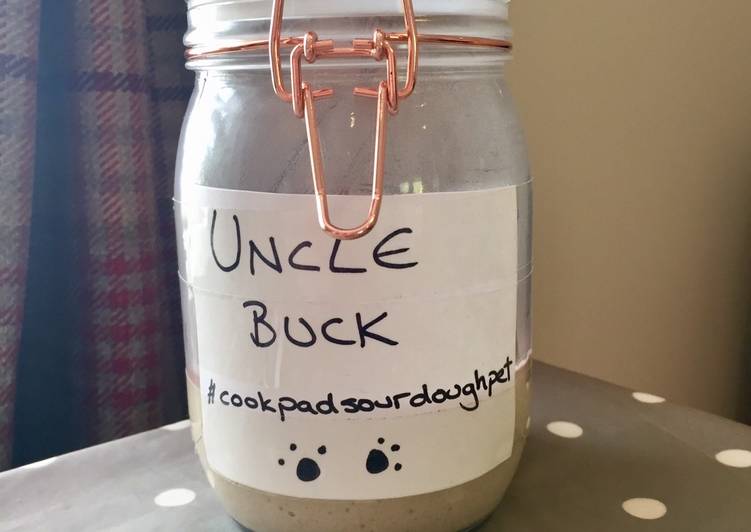
Hey everyone, hope you are having an amazing day today. Today, I will show you a way to make a special dish, buckwheat sourdough starter. One of my favorites. For mine, I am going to make it a little bit tasty. This will be really delicious.
Using a buckwheat sourdough starter gives a closer texture to the wheat baked goods that you are used to without using additives. The process of fermenting the buckwheat (or any grain or seed) releases it's phytates. This makes the vitamins and minerals in the fermented grain much more bio-available (ready for your body to use). Buckwheat cheaty sourdough Naomi Devlin, our nutrition expert, calls this cheaty sourdough because it uses the bacteria in yogurt, or acid in lemon juice to do the work of friendly bacteria that occur naturally in a sourdough starter.
Buckwheat Sourdough Starter is one of the most well liked of recent trending foods on earth. It’s simple, it is quick, it tastes yummy. It’s appreciated by millions every day. They’re fine and they look fantastic. Buckwheat Sourdough Starter is something which I’ve loved my whole life.
To get started with this recipe, we have to first prepare a few ingredients. You can cook buckwheat sourdough starter using 3 ingredients and 6 steps. Here is how you can achieve it.
The ingredients needed to make Buckwheat Sourdough Starter:
- Prepare 35 gm raisins
- Prepare 365 ml boiling water
- Prepare 385 gm buckwheat flour
Instead, this buckwheat-based bread uses fermentation to create a naturally leavened loaf. In spite of its name, buckwheat does not contain wheat and is, therefore, free of gluten. Discarded sourdough starter can be composted, fed to chickens, or used to make other sourdough goodies - like gluten-free sourdough crackers with herbs and cheese! At first sight, this enigmatic sprouted buckwheat sourdough spurs the question every time: "What kind of bread is this?" The deep dark fissures and a slight gray cast are a prelude to what this bread is all about.
Steps to make Buckwheat Sourdough Starter:
- DAY 1 - Soak the raisins in the boiling water, leave them to soak until the water has cooled until it is tepid (just above room temp is fine). Then strain the raisins out of the water.
- In a glass bowl or large jar (I used a large bowl), place 40g of buckwheat flour and 80mls of your tepid raisin water and mix to form a paste. Cover with cling film and leave in a warm spot for 24 hours. Reserve your raisin water for day 2.
- DAY 2 - Whisk in another 40 g of the buckwheat flour and 55mls of your raisin water (warm it very slightly if you can for max yeast growth oomph). Cover again and leave for 24 hours.
- DAY 3 - Whisk in a further 75g buckwheat flour and 115 ml of your raisin water. Cover and leave to ferment for a further 24 hours.
- DAY 4 - Hopefully today you will start to notice a mild vinegar like smell and you may see some large surface bubbles. Discard half your mixture (don't throw it out - you can make pancakes, crackers and even cookies with this discarded batter). Then whisk 75g buckwheat flour and 115 ml of raisin water to your starter. Cover and leave to ferment for 24 hours.
- DAY 5 - Whisk in your remaining 155g of flour and add 225 ml of regular tepid water. Cover loosely and set aside for 4 hours of until really bubbly. Then store in the fridge for a final 12 hours before using.
Discarded sourdough starter can be composted, fed to chickens, or used to make other sourdough goodies - like gluten-free sourdough crackers with herbs and cheese! At first sight, this enigmatic sprouted buckwheat sourdough spurs the question every time: "What kind of bread is this?" The deep dark fissures and a slight gray cast are a prelude to what this bread is all about. A touch of sweetness, slightly sour, earthy, and creamy—a concert of flavors and textures in this sprouted buckwheat sourdough. The longer the starter has been dormant, the more times it will need to be refreshed - the process of pouring off half the starter and replacing it with new flour and water - to reactivate. If your starter is ready to use, a teaspoonful of the mixture should float in warm water.
So that’s going to wrap it up with this exceptional food buckwheat sourdough starter recipe. Thanks so much for reading. I’m sure that you will make this at home. There is gonna be interesting food at home recipes coming up. Don’t forget to bookmark this page on your browser, and share it to your loved ones, colleague and friends. Thank you for reading. Go on get cooking!