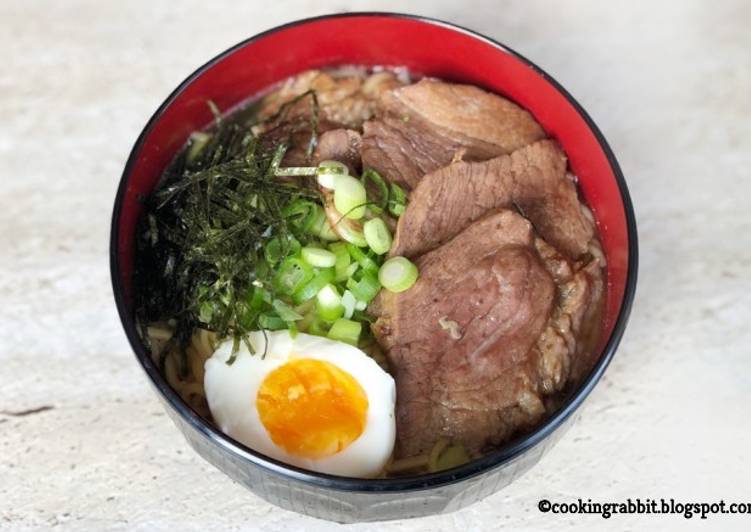
Hello everybody, it’s Brad, welcome to our recipe site. Today, I will show you a way to prepare a special dish, shoyu ramen. It is one of my favorites food recipes. This time, I’m gonna make it a bit tasty. This is gonna smell and look delicious.
Shoyu ramen is one of the most well liked of recent trending meals on earth. It’s simple, it’s fast, it tastes delicious. It’s appreciated by millions every day. Shoyu ramen is something which I have loved my entire life. They are fine and they look wonderful.
Just to let you know by signing up to our newsletter you. Shoyu is soy sauce in Japanese. So Shoyu Ramen means noodles with a soy sauce flavoured soup broth. What kind of noodle is Ramen?
To get started with this recipe, we have to prepare a few components. You can have shoyu ramen using 22 ingredients and 12 steps. Here is how you can achieve that.
The ingredients needed to make Shoyu ramen:
- Make ready 3 packages ramen noodles
- Get for the soup:
- Make ready 1 1/2 tbsp sesame oil
- Take 3 cloves garlic (minced)
- Make ready 5-6 cm piece of ginger (minced)
- Prepare 3 tsp chili bean sauce
- Prepare 3 cups chicken stock
- Prepare 3 cups dashi
- Make ready 3 3/4 tbsp soy sauce
- Get 3/4 tbsp sake
- Prepare 2 tsp salt (to taste)
- Take 1 1/2 tsp granulated sugar
- Make ready for the dashi:
- Take 20 gms dried kombu
- Make ready 30 gms bonito flakes
- Get toppings (optional):
- Take 1 lt water
- Prepare Homemade Chashu
- Get Menma (fermented bamboo shoots)
- Make ready 1 soft-boiled egg
- Take 3 pieces nori (seaweed)
- Get 3-6 slices Narutomaki (Japanese fish cakes)
Among these, the soy sauce version is noted for its curly noodles and tangy, salty and savory, but light broth. Tare Called the soul of ramen by some, tare is essentially a flavored, concentrated soy sauce. We will be making this once and using it three different ways: as braising liquid for the pork belly,. Shoyu Ramen simply refers to ramen served with a soy sauce-based broth that is usually in clear, brown color.
Instructions to make Shoyu ramen:
- Preparing the Dashi: Wipe your kombu with a damp cloth to clean off any impurities, then make a few shallow cuts into the kombu.
- Add the water to a pot and add the kombu to and the pot. Allow it to soak for about 30 minutes before turning on the heat.
- Turn the heat on medium and let it boil slowly. Remove from heat just as the water begins to boil.
- Add the bonito flakes and return to the heat. Allow the water to simmer for another 1 minute. Be careful not the let it boil over.
- Remove the dashi from the heat and wait for the bonito flakes to sink to the bottom of the pot.
- Finally, strain the dashi and use for the rest of this recipe. If there is any leftover dashi it can be stored in the fridge for about 1 week.
- Preparing the Soup: Heat up the sesame oil in a large pot and add your minced garlic and ginger. Sauté until fragrant.
- Add the chilli bean sauce and mix well.
- Next add the rest of the ingredients for the soup and allow it to simmer for several minutes over medium low heat.
- Season the soup with salt, and then strain the soup through a fine mesh strainer or cheese cloth into another pot.
- Once the soup is done, prepare the ramen noodles as per packet instructions.
- Place the noodles in a bowl and add your toppings before ladling over with the soup. Serve immediately.
We will be making this once and using it three different ways: as braising liquid for the pork belly,. Shoyu Ramen simply refers to ramen served with a soy sauce-based broth that is usually in clear, brown color. If you're in Tokyo, Shoyu is the most familiar form of ramen you'll find. To make a good bowl of ramen is an art form itself. Ramen chefs pull together different elements to define the bowl of noodles.
So that is going to wrap it up for this exceptional food shoyu ramen recipe. Thanks so much for reading. I am confident that you can make this at home. There’s gonna be more interesting food in home recipes coming up. Remember to bookmark this page in your browser, and share it to your family, friends and colleague. Thank you for reading. Go on get cooking!